
Vocal Ranges and Voice Types: Chart From Bass to Soprano (2026)
Vocal ranges for every voice type, with a chart: soprano, mezzo, alto, tenor, baritone and bass, male and female voice types, and how to find your vocal range.
Your vocal range is the span from the lowest note to the highest note you can sing comfortably. Singing voice types, such as soprano, alto, tenor and bass, group singers by that range and by the color of their voice. Knowing yours helps you choose songs that fit, pick the right key, and sing without straining. This guide covers the vocal ranges of every main voice type, with a chart, and how to find your own.
Vocal range chart
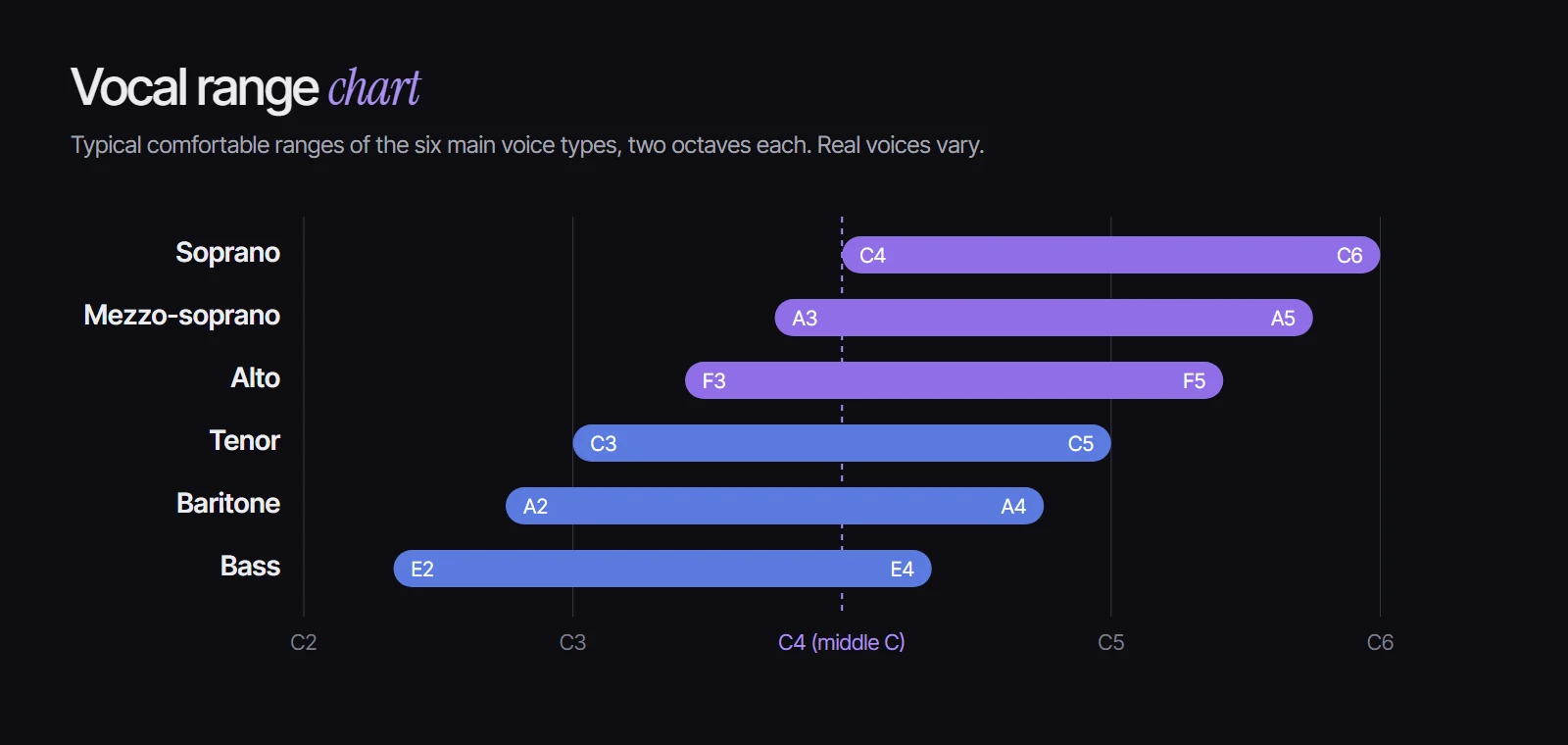
Typical comfortable vocal ranges, using the note names where C4 is middle C:
- Soprano: C4 to C6.
- Mezzo-soprano: A3 to A5.
- Alto (contralto): F3 to F5.
- Tenor: C3 to C5.
- Baritone: A2 to A4.
- Bass: E2 to E4.
Each range is about two octaves. Real voices vary: many singers reach a few notes beyond these, and two singers with the same range can still be different voice types because of how their voices sound.
Female voice types
- Soprano: the highest voice type, bright and clear at the top. Sopranos often carry the melody in choirs.
- Mezzo-soprano: the middle female voice, with a warmer, fuller sound than a soprano and a strong lower range.
- Alto or contralto: the lowest female voice type. In choirs "alto" names the part; "contralto" is the classical name for a true low female voice, which is rare.
Male voice types
- Tenor: the highest common male voice, bright and ringing at the top of the range.
- Baritone: the middle male voice, and often said to be the most common one. Many pop, rock and country singers are baritones.
- Bass: the lowest voice type, with a deep, dark sound at the bottom of the range.
- Countertenor: a male singer who sings in roughly the alto range, usually using a developed head voice or falsetto.
More than range: what decides a voice type
Range is only part of it. Voice teachers also listen for:
- Tessitura: the part of your range where your voice feels and sounds best, which is often more telling than the highest or lowest note.
- Timbre: the color of the voice, from bright and light to dark and heavy.
- Register breaks: where your voice changes gear, for example from chest voice to head voice. These sit at different notes for different voice types.
Classical singing divides voice types further (for example, lyric and dramatic sopranos). In pop, singers are usually described more loosely by range and style.
How to find your vocal range
- Warm up with a few minutes of humming or gentle slides.
- Find your lowest note: sing down a scale or slide down until the note gets breathy or unclear. The last clear note is your lowest.
- Find your highest note: sing up until you strain. The last comfortable note in your normal voice is your highest; note falsetto notes separately if you like.
- Name the notes by matching them on a piano, or sing them into the free Vocal Range Test, which shows each note, your range and the closest voice type.
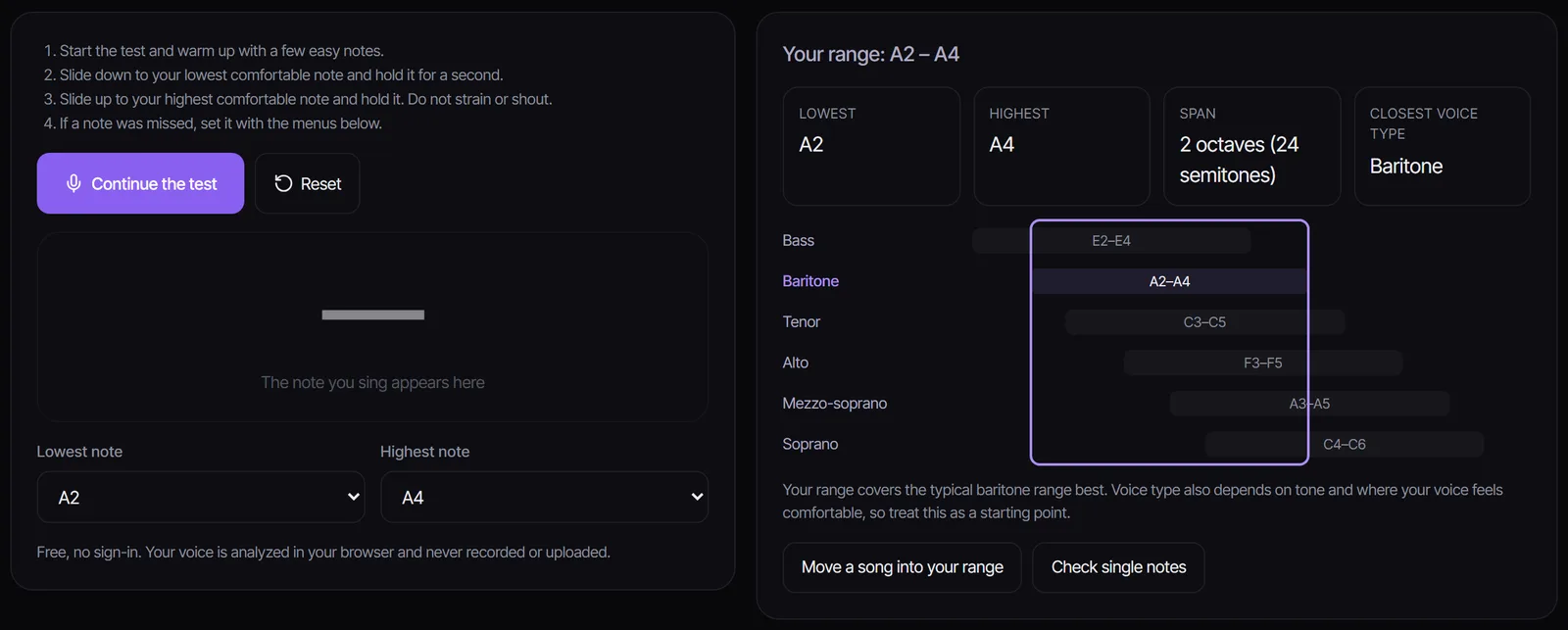
Test again on another day: your range changes a little with warm-up, time of day and tiredness. To check single notes as you sing, use the Pitch Detector.
How to use your vocal range
- Choose songs that fit: compare a song's lowest and highest notes with your range before you learn it.
- Change the key: if a song sits too high or too low, move it with the Pitch Changer. A few semitones often make a song comfortable.
- Write in your range: when you make a song with the AI song maker, name the key and the voice you want, such as "baritone male vocals, key of G", and the melody is more likely to suit you.
- Hear other voices: the AI Singing Voice Generator sings your lyrics with different voices, which helps you hear how a song works for each voice type.
Frequently asked questions
What is the most common voice type?
Among men, baritone is usually said to be the most common; among women, mezzo-soprano. Many people sit between two types.
What is a good vocal range?
Many people sing comfortably across about one and a half to two octaves, and training extends it. A wide range matters less than singing well in the range you have.
Can your vocal range change?
Yes. Training, regular singing and good technique usually add notes at both ends. Age, illness and tiredness can narrow it for a while.
What is the difference between vocal range and voice type?
Vocal range is the notes you can sing. Voice type combines range with tessitura, timbre and where your voice changes register.
What is the highest voice type?
Soprano. Some sopranos, called coloratura sopranos, sing very high, fast passages well above C6.