What Is BPM in Music? How to Find a Song's BPM and Key (2026)
What is BPM in music: beats per minute, the tempo of a song. Typical BPM by genre, half and double time, and how to find and change the BPM and key of a song.
BPM stands for beats per minute: the number of beats in one minute of music. If you have ever tapped your foot to a song, each tap is a beat, and BPM counts them. So what is tempo in music? Tempo is the speed of that beat, and BPM is the number we use to measure it. This guide explains what BPM means, typical BPMs by genre, and how to find, and change, the BPM and key of any song.
What does BPM mean in music?
At 60 BPM there is one beat every second; at 120 BPM, two beats every second. A higher BPM means a faster song. In most music written in 4/4 time, the beat you tap along to is the quarter note, so a song at 120 BPM has 120 quarter notes, or 30 bars of four beats, per minute.
BPM tells you the speed of the pulse, not how busy the music sounds. A slow ballad can have fast drum fills, and a fast song can have long, held notes.
BPM and classical tempo markings
Classical scores often name the tempo in Italian instead of giving a number. Roughly:
- Largo: very slow, about 40–60 BPM.
- Adagio: slow, about 66–76 BPM.
- Andante: walking pace, about 76–108 BPM.
- Moderato: moderate, about 108–120 BPM.
- Allegro: fast and lively, about 120–156 BPM.
- Presto: very fast, about 168–200 BPM.
The ranges vary between sources and between pieces, so treat them as a guide rather than a rule.
Typical BPM by genre
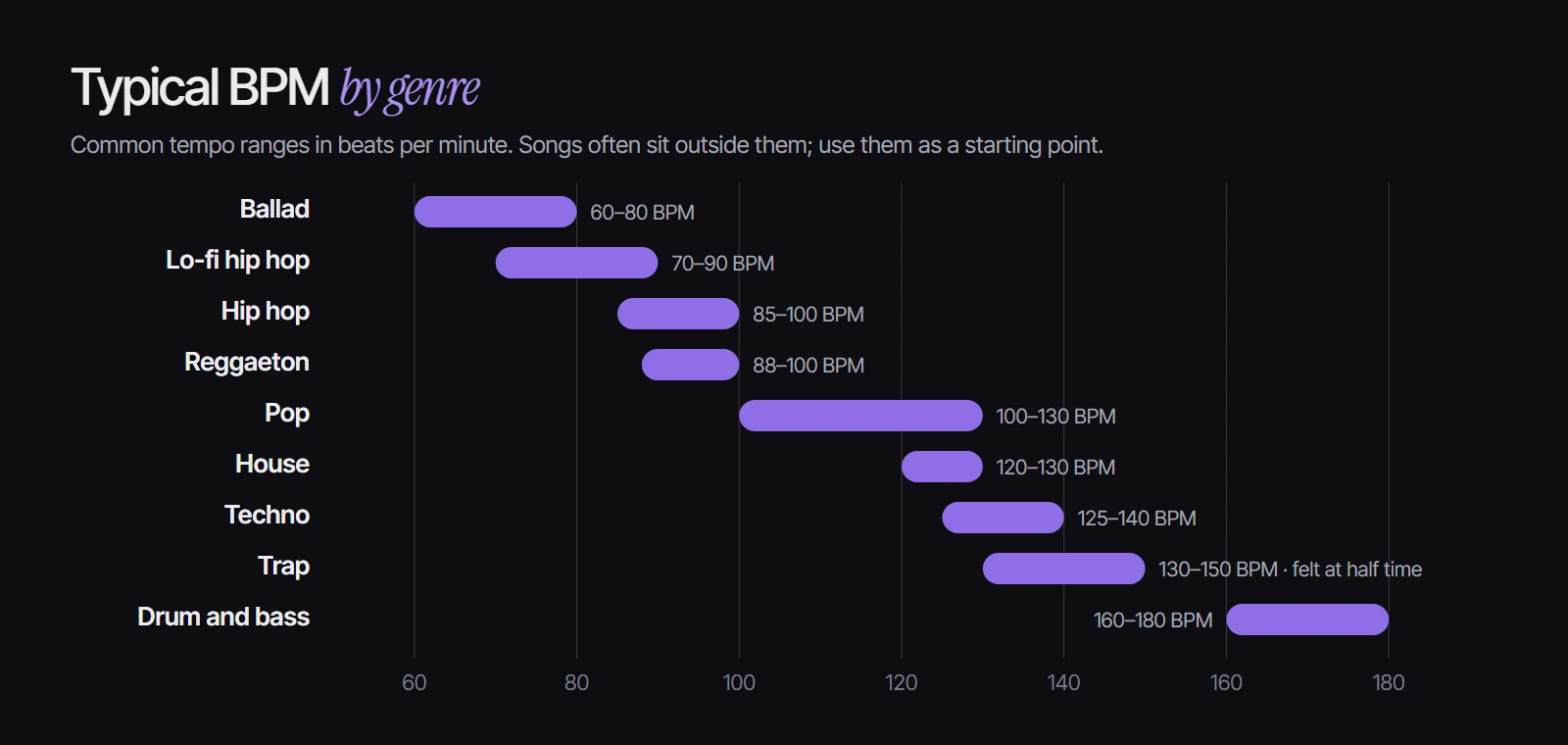
Genres have typical tempos because of how people dance or move to them: house sits around 120–130 BPM for steady dancing, hip hop around 85–100 BPM for a head-nodding groove, and drum and bass at 160–180 BPM for energy. Plenty of hits sit outside these ranges.
Half time and double time
The same song can honestly be described with two BPMs. A trap beat with hi-hats at 140 BPM often feels like 70 BPM, because the snare lands on every other beat; that is called half time. Double time is the reverse. BPM finders and DJs usually pick one of the two, so if a tool says 70 and you hear 140, both are right: multiply or divide by two to match how you count it.
How to find the BPM of a song
There are three easy ways to find the BPM of a song:
- Tap along. Open the BPM Tapper and tap a key or the pad on each beat while the song plays. After about eight taps you get a steady reading, with half and double time shown.
- Count it. Count the beats for 15 seconds and multiply by four. It is quick, but a beat or two of error moves the result by 4–8 BPM.
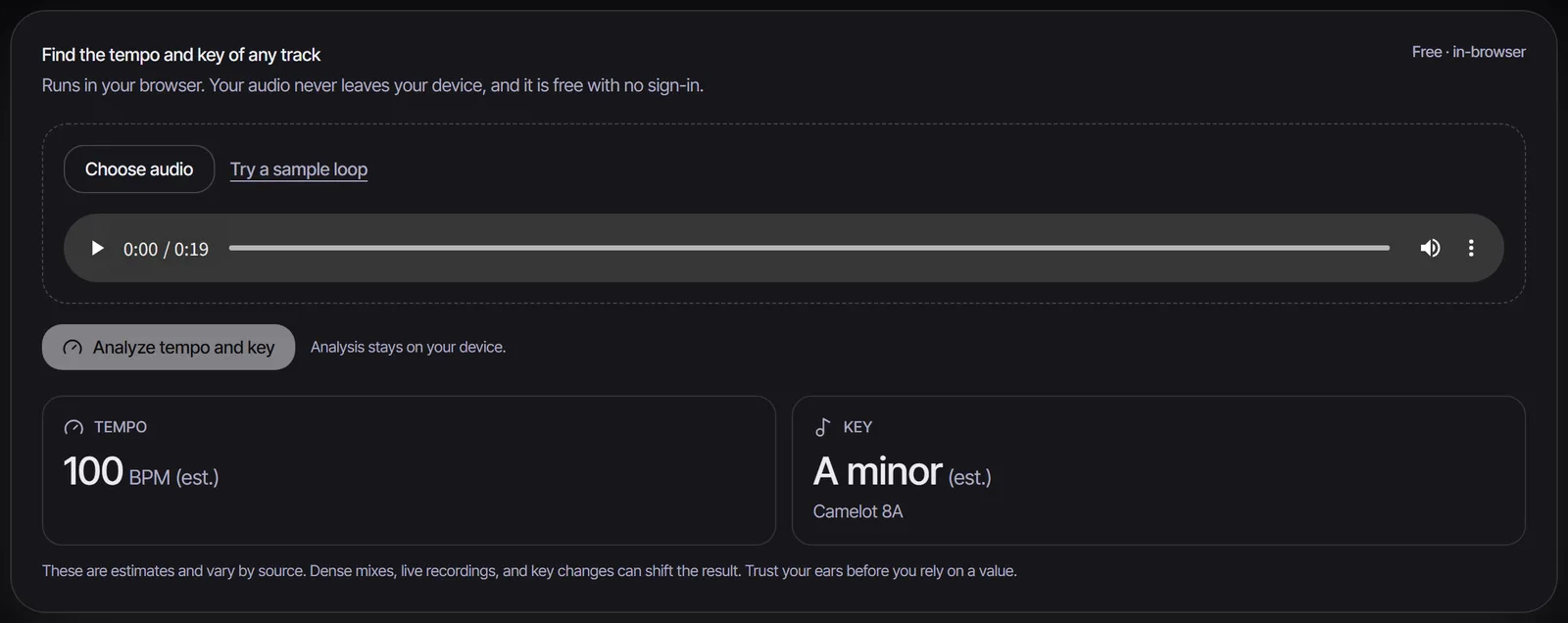
- Analyze the file. Upload the song to the Key & BPM Finder, which detects the tempo (and the key) straight from the audio, in your browser.
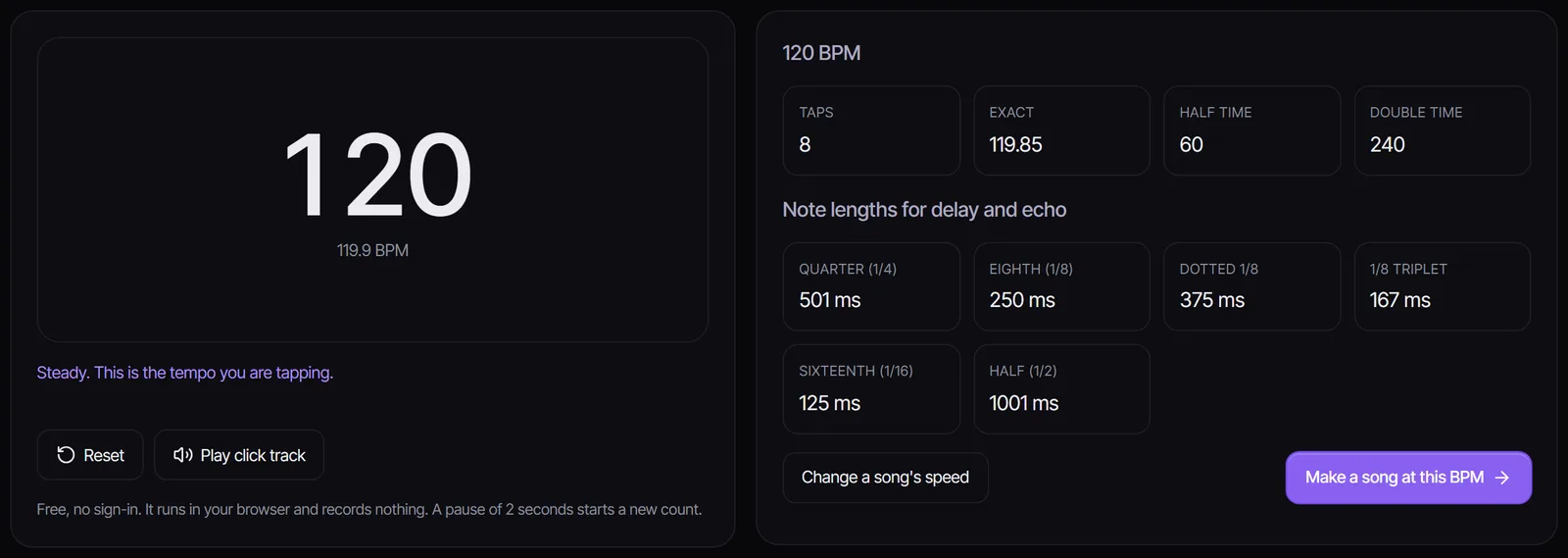
Tapping works best for songs you are listening to anywhere, including on another device. Analysis works best when you have the file and want an exact number.
How to find the key of a song
The key is the scale a song is built on, and the note it feels "at home" on.
- By ear: hum the note the song keeps returning to, especially at the end of the chorus. That is usually the key's root. If the song sounds bright, it is probably major; if it sounds darker or sadder, minor. To check the notes, play or sing them into the Pitch Detector, then enter them in the Scale Finder.
- From the file: the Key & BPM Finder shows the key with its Camelot code, which DJs use to mix songs in compatible keys.
How to change the BPM or key of a song
- Tempo only: the Music Speed Changer slows a song down or speeds it up without changing its pitch, which is ideal for practicing a hard part.
- Key only: the Pitch Changer moves a song up or down in semitones without changing its speed. This is how to change the key of a song to fit your voice.
- Both, for an effect: the Nightcore Maker makes a song faster and higher; the Slowed and Reverb Generator makes it slower, lower and spacious.
Choosing a BPM for your own song
Pick a tempo that matches what the song is for: 60–80 BPM for something intimate, 100–130 BPM for pop that people can move to, 120–130 BPM for house and dance. When you describe a song in the AI song maker, add the BPM number to the style, such as "indie pop, 112 BPM", and the model aims for it.
Frequently asked questions
Does a higher BPM mean a faster song?
Yes. BPM counts beats per minute, so a higher number means the beat goes by faster. Watch out for half time: a song at 140 BPM can feel like 70.
What is a good BPM for a song?
There is no single best tempo. Most pop songs sit between 100 and 130 BPM, ballads around 60 to 80, and dance music around 120 to 130. Choose the tempo that fits the mood and the way people will listen or move.
Do all songs have one BPM?
Most modern songs recorded to a click track do. Live recordings drift a little, classical pieces often speed up and slow down, and some songs change tempo between sections.
What is the difference between BPM and tempo?
Tempo is the speed of the music; BPM is the number that measures it. "A fast tempo" and "160 BPM" describe the same thing in different ways.
How do I find the key and BPM of a song at the same time?
Upload the song to the Key & BPM Finder. It reads both from the audio file in your browser, without uploading it anywhere.